As travel continues to rebuild globally, hoteliers are taking the
time to reevaluate the fundamentals of how they've historically operated
and strategise new ways to recoup lost revenue.
Fortunately, two areas of focus offer cause for fresh hope.
The first is the speed of digitalisation. The world's digitisation is
accelerating at a rapid rate, meaning technology that was once
complementary may now be essential. Incorporating digitalisation and
automation into everyday practices gives hoteliers the opportunity to
amplify team capabilities, so that they can focus on what's truly
important — the guests.
The second area of focus is a renewed drive to prioritise the guest
experience. The core of hospitality is and always will be about its
people. No matter how the world of travel evolves, the nature of
hospitality will always remain the same. How we nurture those
relationships and guest experiences however may forever be changed.
Here are four strategies to navigate the intersection of these trends.
Preparing for increased occupancy
There's no
challenge that brings the human-centric nature of hospitality to light
more than recent labour shortages. Faced with historic pandemic-related
falls in demand, hotels have had little choice but to cut back on
services due to budget, often resulting in significant staff reductions.
However,
as demand and occupancy returns, so do guest requests. This is where
hotels may want to consider tools to help orchestrate tasks such as
automating room assignments, managing housekeeping opt-out programmes,
and proactively scheduling maintenance checks to help give limited time
back to already scaled-down teams.
Beyond the immense complexities echoing behind the scenes, there are
further lessons to be learned. Rapid response times to guest requests
leads to improved satisfaction ratings. Loyalty also begins with guests
knowing they will return where their needs and requests are met with a
personalised touch.
Rethinking sales strategies to fuel growth
Another
area of hospitality where human connection is at the forefront is
sales. Fierce competition for business coupled with a drop-off in demand
makes for a complex sales environment. Effectively prospecting,
building relationships, and negotiating deals with accounts are now met
with a series of new challenges.
Structural shifts in our attitudes about work and a rebalancing of
the tradeoffs with digital interactions are changing the 'why' and the
'how' behind our travel decisions. The good news is sales teams have a
unique role to play when it comes to recovery, serving as the link
between the hotel's eyes and ears into a changing world and driving
profitability.
With some businesses questioning the necessity of travel all
together, providing flexibility, empathy, and reassurance when it comes
to safety and sanitisation measures are critical to recapturing business
as it returns.
A recent industry survey shows that a majority of business travellers
are in fact willing to travel, with 54% citing a desire to make
personal connections with customers and colleagues.
Fostering
relationships with clients is no different, as they consider the
multitude of safety and cost concerns of corporate travel.
For hoteliers, there is also an opportunity to fill the newly created
void in face-to-face interactions. Sales teams should consider how to
position their properties as the preferred location to host meetups for
remote teams or for local businesses that have foregone offices but
still require a physical space to meet clients for impromptu meetings.
Success
will however no longer be reached by simply processing leads but by
combining a deep understanding of new challenges customers' face and a
commitment to solving them in new, more personalised ways.
Enhancing the speed and ease of conducting business — from
prospecting and negotiating to closing deals - can also be mutually
beneficial by leveraging online bookings to reduce RFPs or electronic
options for proposals, signatures, and payments to remove friction from
the buying process.
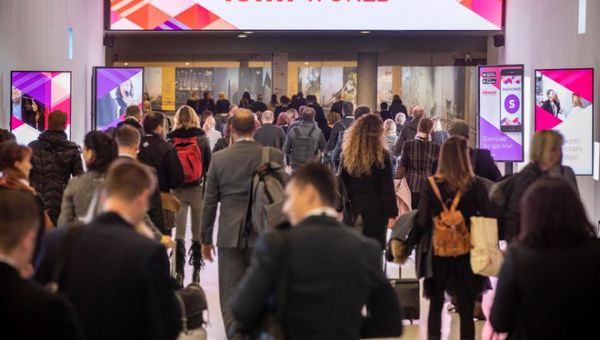
IBTM World Barcelona, which will take place in-person between 30 November – 2 December at Fira Barcelona, is reporting robust exhibitor sales two months ahead of the event.
Enhancing the group business experience
Group
business can generate significant revenue for a property in any given
year, so it's no surprise hotels are anxiously awaiting the return of
the meetings, events, and social-related bookings.
Now as furloughed event planners return to hotels and global
restrictions begin to ease, studies show that both consumers and
industry professionals are indeed eager to resume face-to-face events.
In
fact, 81% of meeting planners say they will hold their next in-person
event sometime in 2021, most of which (59%) will fall in the second half
of the year, with only 19% saying they will hold their next gathering
in 2022 or later.
More requests for proposals mean hotels must be prepared to
accommodate the requirements to support these evolving programmes, as
well as fundamental changes to the overall event experience. Virtual and
hybrid events will remain an important business strategy in the
long-term, even as physical events resume, to ensure events are
financially viable and accessible to more attendees.
Safety
and security protocols, followed by disinfection and social distancing
protocols also show to be top factors influencing group decision making.
Hotels must demonstrate that they follow stringent sanitising, health,
and safety guidelines as part of a new standard of criteria to close
business.
Capacity to accommodate social distancing additionally proves to be a
deciding factor of whether to hold an in-person event with 77% of
meeting planners saying it would affect their meeting location choice.
Automated event space diagramming can help solidify a decision,
allowing planners to see how your space can be set up for their event,
with accurate details before they even sign a contract. To inspire even
more confidence, diagramming can help calculate social distancing
between seating, hand sanitising stations, or boxed lunch stations.
In the world of group business, hotels that can also remove manual
processes, will be able to spend less time in front of a computer and
more time creating the personalised, wow-worthy experiences we have all
been missing. The inherently personal nature of events means group
business is all about people connecting.
Rebuilding hospitality together
Hoteliers that
adapt to these new trends shaping hospitality — from operations to sales
and events — will be the first to experience positive revenue impact.
By considering these actions and combining a skilled staff with new
technologies, as an industry we can better adapt to the future needs of
guests.
Hotels will always be about people. But the reality is digitalisation
and automation can support and augment personal interactions at a
higher level. Finding that balance is what is needed to succeed in this
new — and evolving — world of travel.
//about people
Source: PhocusWire