For a destination celebrated for its food, architecture and multicultural character, Penang is adding another reason for visitors to linger: its museums.
From the reopened Penang State Museum and the new Penang State Museum Automotive Gallery in George Town to Fort Cornwallis and the Guar Kepah Archaeological Gallery on the mainland, the state is turning its past into a more prominent tourism asset.
Dato Tony Goh, general manager of St Giles Wembley Penang and Cititel Express Penang, and chairman of the Malaysian Association of Hotels’ Penang chapter for the 2025-2028 term, believes museums add depth to Penang’s visitor experience.
“Museums give visitors a deeper understanding of Penang beyond the usual attractions,” he said. “Such attractions strengthen Penang’s tourism offering and help ensure that visitors have added reasons to make repeated visits to discover more of the state.”
After more than nine years of restoration and upgrading works, the Penang State Museum on Farquhar Street reopened on 23 July 2026. Housed in a historic building that once served as Penang Free School and later Hutchings School, the museum traces Penang’s multicultural heritage through artefacts, photographs and historical objects, helping visitors understand the state’s evolution from a colonial trading port into one of Malaysia’s best-known tourism destinations.
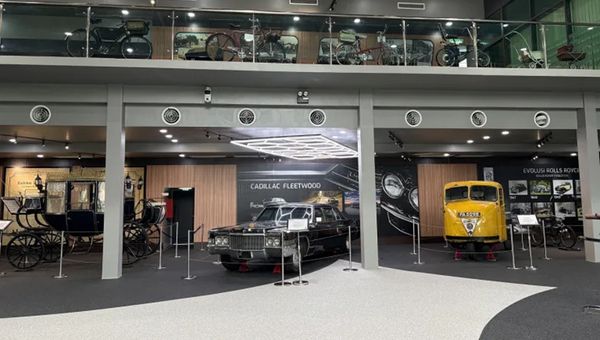
The Penang State Museum Automotive Gallery is the first antique display space of its kind in northern Malaysia.
On Macalister Road, the Penang State Museum Automotive Gallery traces more than a century of land transport history.
The northern region’s first antique automotive gallery features handcarts, bicycles, rickshaws, trishaws, horse carriages, motorcycles and cars, alongside historical photographs documenting early transport in Penang.
Two historic Penang Hill funicular carriages displayed outside the gallery complete the collection.
A 10-minute walk from Cititel Penang, the star-shaped Fort Cornwallis at the Esplanade and one of George Town’s most recognisable landmarks. Malaysia’s largest surviving fort began as a timber stockade after Francis Light’s arrival in 1786 and was later rebuilt in brick and stone, with the present structure completed around 1810.
The fort’s restoration is part of the Penang North Seafront Masterplan, which identifies 22 projects to revitalise the historic coastline. Upgrades to Padang Kota Lama, Fountain Garden, the Esplanade seawall, Queen Victoria Memorial Clock Tower, Linear Garden and the Fort Cornwallis gallery are among the completed works.
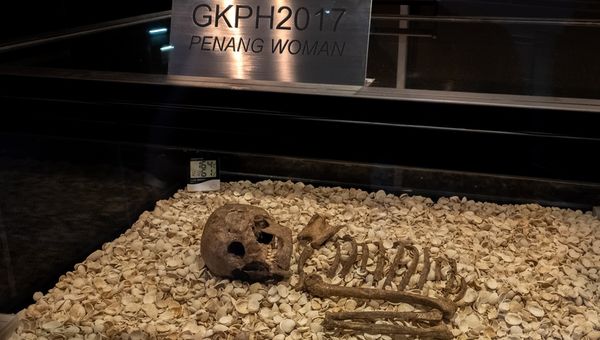
Said to have lived around 3,700 BC, the Penang Woman is the first complete Neolithic skeleton discovered in Malaysia. Photo Credit: Alan Teh Leam Seng
The Guar Kepah Archaeological Gallery in Kepala Batas gives visitors another reason to travel beyond George Town and Penang Island. Officially launched in January 2026, the gallery incorporates a prehistoric shell midden into its architecture and presents archaeological discoveries from the site.
Its star attraction is the Penang Woman, an almost intact Neolithic skeleton discovered in 2017 and radiocarbon dated to approximately 5,700 years before present.
Set amid paddy fields, the gallery offers a contrast to George Town’s urban heritage while connecting visitors with Penang’s prehistoric past.