Few would argue that 2022 has been anything other than a bitter-sweet
year for travel agents as they work overtime to seek speedy solutions
for clients affected by the upheaval in air travel.
Flight delays and cancellations, congested airports, the war in
Ukraine, airfare volatility, China’s Covid closure, mislaid luggage and
lost hotel bookings contributed to the increasingly complex challenges
facing agents as they wrestled with disrupted travel itineraries for
frustrated clients.
THE BAD: Europe’s summer of uncertainty
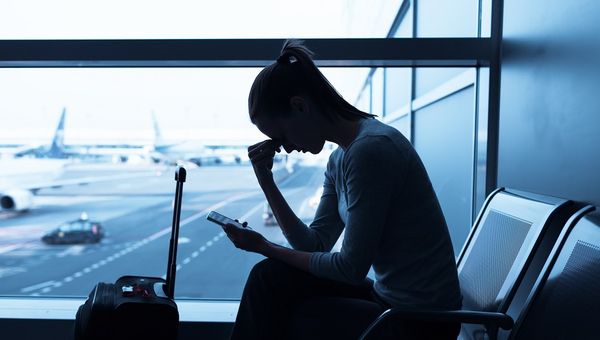
The 'airmageddon' across Europe's airports are creating a toll on both travellers and agents. Photo Credit: Adobe/kieferpix
As travel demand picked up speed, events beyond the control of agents
made seamless travel – particularly to and from Europe – more difficult
to accomplish.
In essence, there was a mismatch between traveller demand, which
rebounded unexpectedly quickly, and aviation staffing levels, which did
not. As a result, agents were caught in the squeeze between
over-extended airlines and over-wrought passengers.
The
latest data from global flight analysis firm Cirium revealed that
airlines cancelled 25,378 flights from their August schedules, of which
15,788 were in Europe.
This led to concerns in Asia that locked down Europeans desperate for
a holiday in Phuket, Bali or anywhere else in the sun would delay
packing their suitcases until journeys were assured to be hassle-free.
No question, consumer confidence in air travel plummeted since May.
ForwardKeys analysis pointed out that last-minute bookings in the week
running up to 10 July dropped by 44%, compared with 2019 levels.
Bookings from Amsterdam were down by 59% and from London by 41%. Both airports are key for outbound travel from Europe to Asia.
Worst
case scenario? Bali Tourism Board believes it will be three years
before European travel full recovers. “There are still many hotels that
feel they cannot open until 2023 if they are to run properly,” said a
spokesman for the board.
Best case scenario? The travel recovery in Asia Pacific has been
slower to recover than in other parts of the world, but this will allow
airlines and airports more time to look and learn from the chaos that
has choked aviation elsewhere.
In
defence of the airlines and airports, staff shortages left them
under-manned, with many employees – including pilots – needing
retraining after long lay-offs. During the pandemic, some 2.3 million
jobs were lost in the aviation sector with ground handling and security
worst affected. Workers have not rushed to return.
Adding to the pressure on airlines and fares, since the start of
2022, the price of jet fuel increased by approximately 90% and, in
mid-July, cost roughly 120% more, on average, than it did in 2021.
And with rising airfares, it’s little wonder destinations in Asia
favoured by European travellers became concerned about how much of the
post-pandemic travel revival they would capture this year.
Lufthansa, Turkish Airlines and British Airways were among airlines
cutting thousands of scheduled flights, while London Heathrow capped the
number of passengers it allowed through the airport on any one day.
Amsterdam’s Schiphol Airport and Frankfurt in Germany took a similar
approach to Heathrow to ease pressure on its resources.
In response to the Heathrow passenger cap, Emirates – another of the
main feeder airlines for European travellers heading to Asia – capped
further sales on its flights out of Heathrow until mid-August, and
adjusted capacity.
THE GOOD: Travel roars back in Asia
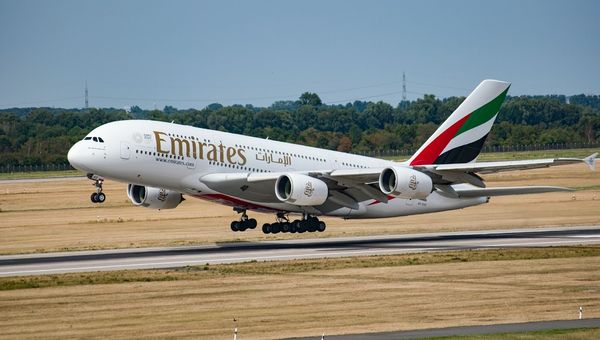
Emirates has swiftly put the Airbus A380 back into service.
There is blue sky for some in Asia although the recovery in travel
across the region is patchy. The slower recovery of travel in Asia
Pacific meant less pressure on airports. Analysis by ForwardKeys
indicated Q3 arrivals in Asia Pacific would reach only 35% of 2019
levels, well below those in Africa & the Middle East (83%), the
Americas (76%), then Europe, (71%).
Singapore
Airlines described the outlook for the SIA group as “robust” with
demand for air travel returning at the start of the summer travel
season, resulting in “an exceptionally strong performance” in June 2022.
“This
was across every route region except East Asia, where travel
restrictions continue to be in place for certain points,” the airline
said.
The Singapore Airlines (SIA) Group carried a total of 1,938,200
passengers in June 2022, up 13.7% from the previous month. Group
passenger capacity reached 64% of pre-Covid-19 pandemic levels.
Also encouraging, Thai Airways made progress with its rehabilitation
plan with July revenue surging due to increased passenger traffic,
aligned with cost-cutting. Compared with January this year, THAI
passenger traffic mid-year increased sixfold.
And in other signals that travel in Asia is on the move, Air Premia –
a new airline based in the Republic of Korea – launched non-stop
services between Seoul and Singapore. And Indian startup Akasa Air was
on schedule for its inaugural flight on 7 August.
The Airbus A380, condemned to a lingering demise not long ago, is
bouncing back from those desert graveyards and is being spruced up to
resume its reputation as the passenger-friendly giant of the skies.
British
Airways is revamping its entire fleet of A380s, Qantas is returning the
superjumbo on routes to Los Angeles and London, via Singapore;
Lufthansa has plans to restart A380 operations next year and Singapore
Airlines has increased A380 scheduled services by almost 200% in the
first nine months of 2022.
Qatar Airways, China Southern and Korean Air have also put A380s back to work.
Emirates, which has the biggest A380 fleet by far, is even calling on
Airbus to consider building a replacement for the A380, which the
aircraft manufacturer says won’t happen now that it has closed down the
A380 production line with the recent completion of its last A380 for
Emirates.
Only
Air France, Thai Airways and Malaysia Airlines are unlikely to bring
the aircraft back into service, and while Etihad has been reluctant to
nominate a date for the A380s return, it is tipped to do so next year.
//Malaysia Airlines
THE COMFY: Luxury enclaves on ground
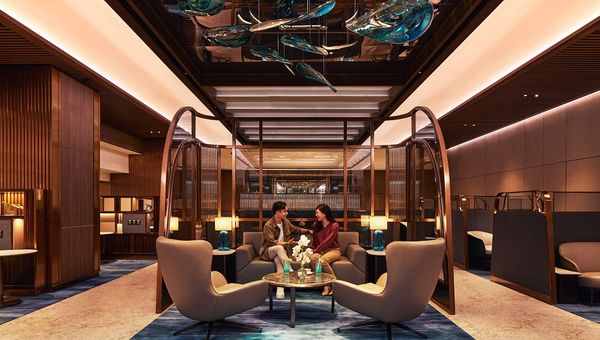
The Private Room within the SilverKris Lounge is designed with privacy in mind.
Premium flyers are being spoiled as never before as airlines splash
the cash on airport lounges – nowhere more so than at Singapore Changi
airport where airlines are now jostling for the prize of ‘best on
ground’.
Singapore Airlines, British Airways and Qatar Airways are each
showcasing refurbished lounges and new spaces to enhance the airport
experience for premium passengers.
After an absence of two years, Qantas reopened its Singapore First
lounge on 18 June to coincide with the return of the
Sydney-Singapore-London ‘Kangaroo Route’. The First Lounge operates
alongside the existing Qantas Business Lounge.
Qantas
group chief customer officer Stephanie Tully said” “We’d only just
opened our brand-new First lounge before the pandemic forced its
closure. Many of our frequent flyers never had the chance to see it.”
The Qantas First lounge has capacity for 240 guests and offers a Neil
Perry fine dining experience. Signature dishes include laksa with
crayfish, and barramundi with sambal browned butter. The Carrara marble
bar’s beverage menu serves champagne, bespoke cocktails and barista
coffee. There are zones for dining, working and relaxing as well as 10
shower suites.
Qatar Airways opened its Premium lounge at Changi Terminal 1 on 15
June, offering an à la carte dining room, deli counter, wine and
cocktail bar and five shower suites. The lounge – which Qatar Airways
describes as “more of a boutique hotel or private club” – welcomes
business class travellers across all oneworld airlines departing from T1
– currently British Airways, Finnair, Malaysia Airlines and Qantas.
Meanwhile, Singapore Airlines has opened the new First Class lounge
and The Private Room, part of the SilverKris Lounge complex, along with
the Business Class lounge. All three lounges share the same reception
area, which welcomes guests with a stunning, curved 8K Sony Crystal LED
display.
The
SilverKris First Class lounge and The Private Room are both reserved
for First Class flyers but with different access requirements. The
Private Room accommodates up to 78 travellers flying in Singapore
Airlines’ own First Class cabins, including the Airbus A380 Suites.
British Airways Singapore Lounge – located on level 3, alongside
those of Qantas, SATS and Thai Airways – offers multiple zones including
a lobby bar, brasserie dining area, and office space. There's also The
Bar, an exclusive area for First passengers and eligible guests.
Finally, Emirates recently reopened its dedicated lounge at Changi,
which allows guests to start their journey with a fully Emirates-branded
experience, rather than stopping by at the Marhaba facility in Terminal
1.