“Looks like a fun trip! Glad it wasn’t a hantavirus ship!”
I received this text message from a friend after sending along a few photos from my most recent cruise – and I think it perfectly exemplifies the uphill battle travel advisors face right now.
Everyone – even folks outside of the travel industry – are well aware of and talking about the crisis that recently unfolded aboard the MV Hondius. The news cycle moves lightning fast these days – and yet, the story is likely to linger in travellers’ minds. For travel advisors, that means continuing to address questions and concerns long after the initial coverage has faded.
And it’s not just hantavirus that’s giving travelers pause right now. It’s also the ongoing conflict in the Middle East, norovirus outbreaks, sky-high airfare, economic uncertainty, potential logistical headaches and a steady stream of headlines that continue to heighten traveller anxiety.
But savvy travel advisors know that periods of uncertainty – like the one we’re in right now – can also become moments to build trust, provide context and guide clients toward informed decisions.
“It’s clear that travellers are turning to their travel advisors more than ever to guide them through the full international journey, from planning to booking to peace of mind while they’re away,” says Janet Bava, chief commercial officer of Windstar Cruises. “For advisors, this is an opportunity, not a challenge.”
From explaining onboard sanitation protocols to addressing broader concerns with empathy and facts, advisors play a key role in helping travellers feel confident at sea. Here are some expert-backed tips and advice for selling cruises right now.
Translate headlines into facts
What people see in the news can feel broad and alarming, even when the underlying details are more contained. In moments like these, clarity matters as much as reassurance. Travellers are not just reacting to headlines – they’re trying to understand risk in context. That’s where facts, not speculation, become the most useful tool in an advisor’s toolkit.
“Advisors should lead with facts rather than reacting to headlines,” says Carla Brake, senior director of sales in the Americas for HX Expedition. “For example, based on publicly available information, this appears limited to a single vessel, with no public indication of broader transmission across the cruise industry.”
Travel advisors should also emphasise that, across the expedition sector, operators continue to follow established health, hygiene and response protocols onboard, she adds. The industry today is also significantly more prepared and experienced than it was pre-pandemic, with established processes to respond quickly and responsibly when situations arise.
Reinforce the differentiators
Not all cruise experiences are created equal, and that distinction becomes especially important during periods of heightened public attention. Travellers may not always know what separates one operator from another, but advisors can help make that difference clear.
“This is also a good opportunity for advisors to reinforce the value of booking with experienced operators – such as HX Expeditions – that have established protocols, trained medical teams and extensive experience operating in remote environments,” says Brake.
“Reputable cruise companies should be able to provide clear, up-to-date information about their onboard protocols and procedures, and advisors should rely on the latest guidance directly from the cruise line so they can share accurate information with clients.”
Bava echoes that sentiment, adding that travel advisors should underscore that cruises are not one-size-fits-all. Windstar’s ships, for instance, which carry between 150 and 350 guests, offer a “very different environment” than most larger vessels, she says.
“The experience is more intimate, more personalised and naturally less crowded, which resonates strongly with travellers seeking comfort, connection and ease,” says Bava. “Combined with immersive itineraries and the ability to visit multiple destinations seamlessly, cruise remains one of the most compelling ways to travel, even in times of uncertainty.”
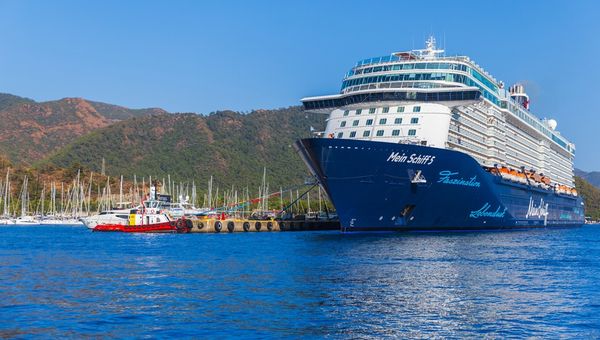
The Mein Schiff 5 was left stranded earlier in March when the Strait of Hormuz was locked down due to the US-Iran war. Photo Credit: iStock/eugenesergeev
Provide confidence and expertise
People still want to travel – but their hesitancy is leading to a much more compressed booking window for summer and a heightened need for reassurance, says Bava.
That shift puts even more weight on the advisor-client relationship. It’s no longer just about finding the right itinerary – it’s about making clients feel seen and heard.
“Many guests are waiting longer to commit, and that’s where travel advisors play a critical role,” says Bava. “They’re not just booking trips, they’re helping clients navigate uncertainty and feel confident in their decisions.”
Take advantage of flexible booking policies
Cruise lines understand that uncertainty is influencing booking behaviour right now. That’s why many are rolling out flexible booking policies to help reduce friction and make international travel feel less risky.
Celestyal Cruises, for example, recently introduced the “Sail with Confidence” promise, which includes flexible booking conditions, low deposits from US$50 per person and 24/7 onboard guest support.
Windstar Cruises also launched a new “Peace of Mind Promise” for eligible 2026 and 2027 sailings. The programme covers the full Windstar-booked journey including cruise fare, hotels, shore excursions, air and transfers, and allows guests to cancel up to seven days prior to departure while retaining the majority of their trip value as a future cruise credit.
“For hesitant travellers, that level of flexibility can make all the difference in moving from consideration to booking,” says Bava. “It’s already proving to be an effective tool for advisors, particularly in this late-booking environment, giving clients the confidence to move forward knowing their investment is protected.”
Lean in and be proactive
Don’t wait for your phone to ring – pick it up and give your clients a call, says Jenn Lee, president and chief marketing officer of Travel Planners International and Vacation Planners.
Lee recently checked in with hundreds of travel advisors. She discovered a stark contrast between those who were being proactive – and those who weren’t. The advisors in her survey who were still seeing positive movement in their businesses weren't “doing anything magical,” she says.
“They were doing something simple: they were treating uncertainty as a reason to reach out, not a reason to pull back,” she adds. “They called clients who hadn't reached out. They brought options, not worry. They said, ‘Given everything going on, I wanted to check in – here are a few things I'm watching and here's what it means for your plans.’ They positioned themselves as the person who had answers when everyone else was adding to the noise.”
Preparation is key
Some of the uncertainty travellers are feeling right now stems from a lack of clear information, making education and preparation especially important for travelers navigating unexpected situations.
“We should always recommend travel insurance and educate clients on what is covered and what is not – the more prepared and educated they are, the better,” says Lee.
Focus on small details and practical solutions
During periods of uncertainty, small details can make all the difference, says Greg Carter, chief executive officer of Terra Nova Expeditions, which specialises in small-ship Antarctica cruises.
For example, travel advisors could proactively check on solo cabin availability for guests who would feel more comfortable in a private space, explore flexible booking options, provide advice on comprehensive travel protection or suggest alternative departure dates to help tailor the experience to a traveller’s individual needs and comfort level.
“Focus on practical solutions and personalisation,” he says. “The most effective conversations are transparent and solutions-oriented. Advisors add value by anticipating questions, addressing concerns directly and helping clients feel that their travel experience has been thoughtfully designed around their needs and possible worries.”
Remind them of the benefits of travel
Periods of uncertainty can amplify hesitation, but they don’t erase the underlying reasons people want to travel. Advisors can help reframe that tension by focusing on what travel adds back into people’s lives.
“Travel offers hope, joy, and light, which is especially essential after challenging times,” says Mary Curry, voyage product director and trip planner at Adventure Life. “Travellers want to travel, and the key is to meet them where they are so they feel good about their decisions.”
Let data guide the conversation
When travellers are feeling hesitant, reassurance alone is rarely enough. What often builds real confidence is context – evidence, comparisons and expertise that help put concerns into perspective.
“Answer questions with data, expertise and perspective, not arguments or persuasion,” says Curry. “Validate their worries, and then offer alternatives that show you've really heard them.”
She adds: “I don't dismiss travellers' concern; rather, I empower them to make their own decisions by accounting for their worries and comparing options so they ultimately feel excited about their choice.”
Source: TravelPulse