At first glance, The Intan looks like any other private residence tucked away in Singapore's Joo Chiat neighbourhood. Step inside, however, and it quickly becomes clear that this is no ordinary museum.
There are no glass display cases, audio guides or QR codes. Instead, guests are welcomed into Alvin Yapp's home as though they were old friends dropping by for tea. "It was never meant to be a museum," he says. "It was my private collection. Then people started asking to visit, and it grew from there."
That collection, built over four decades, has since evolved into one of Singapore's most distinctive cultural attractions. Today, The Intan is officially recognised as a private home museum under the National Heritage Board's Museum Roundtable.
For Alvin, however, it began with a simple question of identity.Growing up in a rapidly modernising Singapore, he remembers feeling different from his classmates. He spoke English at home while many of his friends spoke Mandarin, watched Hollywood films instead of Chinese cinema, and ate food that few of his peers recognised. Curious about his own roots, he began collecting Peranakan artefacts as a teenager to better understand his heritage.
That personal journey has become an immersive experience for visitors today. Guests are guided through two levels of Alvin's home, exploring ancestral altars, mother-of-pearl furniture, intricate beadwork and one of the world's largest private collections of Peranakan beaded shoes. The experience concludes over traditional Nonya kueh and tea and, if the mood strikes, Alvin may even end the session with a song on the piano.
But it's Alvin himself who leaves the biggest impression.
A former Singapore Airlines station manager, he brings decades of hospitality experience to every visit, blending historical knowledge with personal anecdotes about life in Singapore. Conversations often wander beyond Peranakan culture to everyday topics like HDB living, durian, local customs and what it's really like to call Singapore home.
Over the years, The Intan has welcomed everyone from diplomats and ministers to high-profile guests including former Temasek CEO Ho Ching, singer Josh Groban, actress-singer Joanna Dong, and James and Oliver Phelps, better known as Fred and George Weasley from the Harry Potter films.
Yet some of Alvin's most memorable experiences have been far more personal.
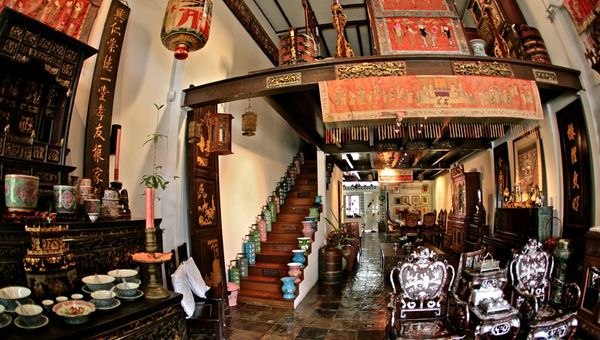
Two floors of Peranakan treasures.
His home has hosted surprise wedding celebrations, while one family chose The Intan to commemorate the first anniversary of a loved one's passing because it was a place that held special meaning. Before the pandemic, Alvin also organised annual charity concerts, teaching children Peranakan songs on the violin before they performed to raise funds. Over a decade, the initiative raised more than S$1 million, with donors who contributed S$10,000 rewarded with an intimate Peranakan dinner hosted in his home.
“If you can find that one experience that truly stays with someone, that becomes the story they tell when they go home.”– Alvin Yapp, The Intan
For travel advisors, The Intan isn't simply another cultural attraction to slot into a Singapore itinerary. It's the experience to recommend when clients want a personal encounter with the city's heritage, rather than a conventional museum visit.
"You can't make every experience a 10 out of 10," he says. "But if you can find that one experience that truly stays with someone, that becomes the story they tell when they go home."
He likens the experience to scuba diving rather than snorkelling. While larger museums provide a broad overview of Peranakan culture, The Intan offers the opportunity to dive deeper through conversation, debate and personal connection.
That philosophy extends to accessibility too. Alvin has hosted blind visitors using tactile replicas of artefacts, adapts tours for wheelchair users by bringing objects downstairs, and is exploring AI-assisted technology to make future visits even more inclusive.
"When you walk in," he says, "the house becomes the museum. When you leave, it becomes a home again."
This article was first published in Travel Weekly Asia’s July-September 2026 issue. Click here to read more from this issue.