The Hong Kong-Singapore travel bubble may have burst for now, but the Hong Kong Tourism Board (HKTB) is forging ahead with a renewed perspective and strategy in anticipation of global travel when it comes back.
“When borders reopen, the visitors we welcome back will also be different in fundamental ways. Since travelling will no longer be as simple as it once was, guests may stay longer, and look for more in-depth experiences and an authentic understanding of the destination’s culture," said HKTB chair Pang Yiu-kai, speaking to travel industry leaders in aviation, hospitality and digital travel retailers at the 2021 Tourism Update earlier this week.
Speaking alongside HKTB executive director Dane Cheng, Pang said the NTO's plan is to position Hong Kong’s reemergence as a travel and MICE hub with a keen eye on the industry's quickly emerging new standards.
For Hong Kong travel sector to navigate the new normal, Pang noted that digitisation, contactless facilities and virtual events — once thought to be a stop-gap measure — will become standard.
Among the prominent trends the HKTB will need to embrace is the increasing digitisation of travel, and the board is now doubling down on its digital messaging.

Pang Yiu-kai (left) and Dane Cheng of HKTB noted that digitisation, contactless facilities and virtual events will become standard.
Large-scale cross-border promotions such as the tailored 'Open House Hong Kong' series, which targets key regional markets, will kick into high gear once cross-border travel resumes, as will the existing '360 Hong Kong Moments' and interactive 'Superfans' promotional spots, particularly in overseas markets.
Those will be part of HKTB’s efforts to “retell the Hong Kong” story and restore the city’s perception internationally. Cheng declined to elaborate on what the current perception is.
When visitors return, they can expect a more carefully curated look in Hong Kong that celebrates its heritage, nature and culture more than in the past, paired with a strong digital element — such as “seeing” historical cityscapes with an AR app.
The HKTB will be expanding its in-depth “Hong Kong Neighbourhoods” scheme to include the West Kowloon Cultural District in time to complement the opening of the M+ museum in late 2021.
Mega-events will restart with the inaugural Cyclothon across the HKZM Bridge in October, which will lay the groundwork for a pan-Greater Bay Area (GBA) version of the event in the future, as well as other hybrid events.
With Asia-Pacific’s economy predicted to rebound ahead of the rest of the world, the 70 million-plus residents of the GBA will become an even more crucial source market for Hong Kong, especially in light of its stronger spending patterns and quicker travel recovery versus the rest of China.
Vaccination key to recovery
Whatever the plan might be, local industry players in attendance at the conference agreed: any return to pre-pandemic travel levels would be dependent on wider vaccination in all jurisdictions.
“The sooner we are all vaccinated, the sooner mass international travel can resume,” said Pang.
“It’s the key for tours and economic recovery, not only for Hong Kong but for all destinations worldwide. The faster we’re vaccinated the quicker we can assure visitors Hong Kong is a Covid-safe place.”
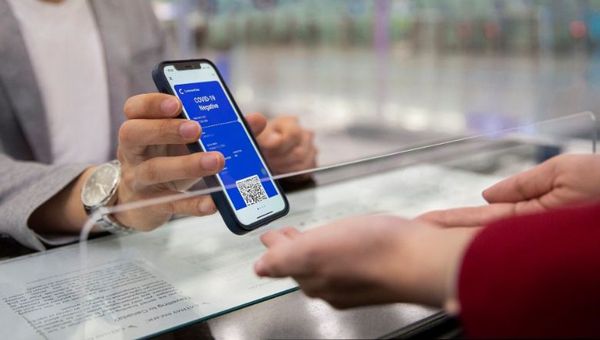
While air travel bubbles are a first step, these plans won't survive without mass vaccination and herd immunity, says Cathay Pacific Airways. Photo Credit: Cathay Pacific Airways
But before any of that can happen, visitors need to arrive, and the airline industry will continue to struggle for several years, Simon Large, director of customer relationships at Cathay Pacific Airways, is in agreement. He added that although the first step in an air travel rebound will be in “fragile” bubbles, they won’t survive without mass vaccination and herd immunity.
Looking at its major flight destinations, Cathay research suggests this could be achieved by the end of 2021 in Canada and the UK, and in Hong Kong, Japan, the US, the EU, Singapore and South Korea by 1Q 2022. That could boost flights, which are currently sitting at less than 4% of 2019 levels, but even if they resume, Large envisions a daunting passenger experience in the next three to six months.
"There will be a lot of testing pre-departure at the airport and on arrival, there will be lots of requirement and paperwork, and passengers will need to know this in advance to find the correct documentation. There will be long waiting times," he said. “It’s going to be an arduous process."