For years, China’s inbound and incentive travel story centred on Beijing, Shanghai and Guangzhou. That is changing rapidly as second- and third-tier cities built around mountains, deserts and water towns lure travellers further off the beaten path.
Mark Wong, senior vice president, Asia Pacific, at Small Luxury Hotels of the World (SLH), is backing that shift with real portfolio growth. “Greater China is one of our fastest-growing portfolios in Asia Pacific – currently with more than 25 hotels out of 164 in APAC, representing around 15%,” he says.
The behaviour driving that growth, Wong explains, is a slower style of travel.
“What I’m consistently hearing from hotel owners and guests alike is a desire to stay longer and go deeper – fewer places, more time to immerse in each place,” he says.
Carol Yang, general manager of Shanghai Muh Shoou Zhujing, agrees that urban fatigue is helping to drive the change. Guests, she says, “no longer seek crowded landmarks and rushed tick-box sightseeing. Instead, they long for a secluded private hideaway to restore inner peace of mind and soul.”
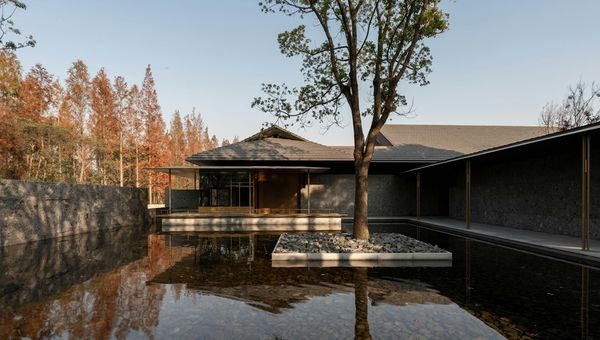
Urban fatigue is driving traveller demand to retreats like Shanghai Muh Shoou Zhujing.
Slow travel, quiet luxury
For international visitors, SLH’s Wong says much of the current demand comes from repeat guests who have already visited the obvious stops. Their question, he says, becomes: “Where in China haven’t I seen yet?”
The product answering it is increasingly built around geography itself. “The ‘scenic corridor’ itinerary has become a genuinely viable luxury product in China,” he says, linking cities such as Dunhuang, Xi’an and Chengdu into a single journey.
What I'm consistently hearing from hotel owners and guests alike is a desire to stay longer and go deeper – fewer places, more time to immerse in each place.– Mark Wong, senior vice president Asia Pacific, Small Luxury Hotels of the World
Shanghai Muh Shoou Zhujing makes the same case just an hour outside a major gateway city.
Carol Yang traces the resort’s name to an old farming custom: “Farmers would spare one fruit after harvest for forest birds, which embodies the philosophy of harmony between humans and nature, as well as self-restraint – the core spirit of our resort.”
That philosophy shapes the guest experience, she says. “Instead of superficial stop-and-go sightseeing, we invite guests to immerse themselves deeply in local nature and the cultural heritage of the ancient Zhujing water town.”
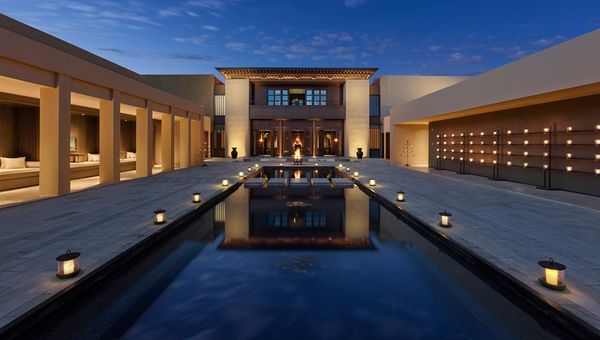
Jangala Dunhuang brings high-end hospitality to the edge of the Mingsha Dunes, where Silk Road landscapes become part of the guest experience.
Out on the Silk Road, Jangala Dunhuang is testing how far the contrast between raw landscape and polished service can go.
“Modern travellers, especially high-net-worth individuals, are shifting from ‘checklist tourism’ to ‘spiritual rejuvenation,’” says Roy Wang, director of brand development and marketing at Jangala Dunhuang, and Roy Wang.
He credits the property’s appeal to the tension in its setting: “This contrast of ‘extreme wilderness meets extreme luxury’ is precisely what draws urban elites seeking a true ‘return to the heart’.”
Following the incentive dollar
On the incentive side specifically, Aki Yang, partner at WildChina Corporate Services, says the fundamentals of rewarding people with once-in-a-lifetime experiences have not changed.
What has changed is access.
“For incentive groups below 30 people, they can go as deep as they wish because China has built its rural infrastructure very well.”
That access does not extend equally everywhere, however.
For incentive groups below 30 people, they can go as deep as they wish because China has built its rural infrastructure very well.– Aki Yang, partner, WildChina Corporate Services
“Chengdu and Yunnan are still the most popular choices for incentive groups, while Zhangjiajie and Chongqing are very popular among leisure clients but not yet leading destinations for high-end incentive groups,” Yang notes.
Club Med is seeing the same corporate appetite for hidden destinations in China show up directly in its numbers.
“Improved destination accessibility and China’s expanded visa-free travel ecosystem are the definitive game-changers,” says Rachael Harding, CEO of Club Med ESAP.
“Today’s corporate groups want to escape the office grid completely to inspire fresh thinking and foster team cohesion.”
The scale has surprised even her own team. “We have unlocked exponential demand, highlighted by staggering business growth of more than 500% this year in our MICE groups travelling from Southeast Asia and the Pacific,” she says, with resorts in Yabuli, Beidahu and Changbaishan picking up much of that momentum alongside Lijiang.