As cruise momentum builds across Asia, the region’s ports recorded a bustling year of ship calls and passenger movements in 2025, underscoring a region that is indeed fastest growing when it comes to cruise market growth.
Singapore
Singapore’s cruise sector continues to chart robust growth. In 2024, the destination welcomed 1.8 million cruise passenger throughputs from 340 ship calls – half were international passengers.
Recent additions include Ritz-Carlton Yacht Collection in December 2025, with Disney Cruise Line set to debut in March 2026 and Explora Journeys arriving in November 2027. Disney Adventure will homeport in Singapore this year, further reinforcing the city’s position as a regional cruise hub alongside established homeports such as StarDream Cruises’ Genting Dream and Royal Caribbean’s Ovation of the Seas.
Anchoring these is the newly revamped Marina Bay Cruise Centre, now capable of handling two mega ships at once.
Malaysia
Tourism Malaysia has recently expanded the scope of its Charter Flight Matching Grant (GSPC) to include the cruise sector, a scheme previously limited only to charter flights.
Cruise operators, travel agents and tour operators bringing cruise ships into Malaysia can tap into RM50 million (US$12.3 million) in funding, although allocations will be shared with the aviation sector. Penang, one of the country’s key cruise ports, is targeting one million cruise passengers in 2026, up from 700,000 arrivals last year.
Related: Tourism Malaysia extends charter flight grant to cruise sector
In late November 2025, M/V Piano Land also made waves as the first Chinese cruise ship to be homeported in Malaysia at Port Klang Cruise Terminal. This came shortly after Selangor launched a cruise tourism initiative in November, which aims to develop Port Klang into a major homeport in the region.
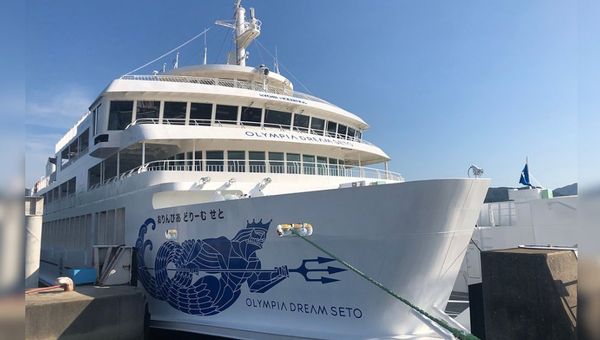
Japan has set a goal of one million cruise passengers by 2030. Photo Credit: Japan Convention Bureau
Japan
Japan has set its sights firmly on growth, with industry bodies jointly targeting one million cruise passengers by 2030.
The Japan Association of Travel Agents, Japan Oceangoing Passenger Ship Association and Japan International Cruise Committee aim for 70% of this volume to come from Japan-based vessels and 30% from international ships. Supporting initiatives include deeper collaboration with global cruise lines, expanded cruise services, development of onboard entertainment cruises, and growth in fly-cruise offerings.
Marketing efforts have also stepped up, with a new “Let’s cruise 1M” slogan and logo rolled out to agents and cruise operators, alongside outreach to younger audiences via social platforms.
Cruise numbers came in at 224,000 in 2024, and while significant, still fell short of the pre-Covid figure of 356,000 in 2019.
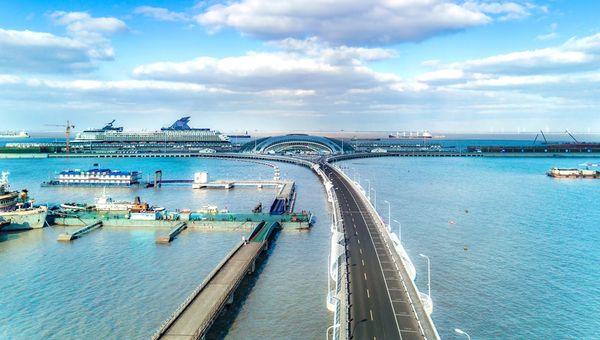
Shanghai’s Wusongkou International Cruise Terminal recorded a 16.2% hike in port cruise calls last year. Photo Credit: Adobe Stock/lotusjeremy
China
China emerged as one of the region’s fastest-recovering cruise markets in 2025, with inbound cruise tourism rebounding ahead of the global average. Local data indicates the country accounted for more than half of Asia Pacific’s cruise growth between 2024 and 2025.
Shanghai recorded a 16.2% increase in cruise calls last year, totalling 538 inbound and outbound sailings, while Xiamen Port posted a striking 129% surge in cruise arrivals. Tianjin International Cruise Home Port welcomed 170 ship calls, translating into more than 400,000 inbound and outbound passenger trips.
Local authorities attributed these to smoother terminal operations, including streamlined inspections and expanded clearance channels, while the expansion of visa-free policies for foreigners also supported the inbound cruise tourism boom.
According to local data from the China and Asia Cruise Economic Prosperity Index and the 2025 China cruise industry development report, overseas cruise passenger numbers have jumped 210%, while interest in domestic cruise brands rose to 40%.
Hong Kong
Hong Kong welcome approximately 190 cruise calls in 2025, with a passenger throughput of about 630,000, a 26% year-on-year increase. The city welcome 17 international cruise lines to Kai Tak Cruise Terminal and the Ocean Terminal, including Celebrity Cruises, Silversea, Costa Cruises, Cunard, and Norwegian Cruise Line. Efforts to attract more international cruise lines – both for port calls and homeporting – will continue into 2026.
China, one of its largest source markets, will also continue being a priority in 2026. Over the 1-3 January New Year holiday, over a million of the 3.2 million were mainland tourists. As such, Hong Kong Tourism Board will be looking at more charter flights and cruise calls ahead of the upcoming Lunar New Year peak season.
South Korea
South Korea’s cruise market is experiencing a major upswing as key ports move towards infrastructure upgrades and deepen global tourism strategies.
Busan port, the seventh largest in the world, welcomed 400,000 cruise passengers in 2025, alongside a record 238 cruise calls for the year to date.
Infrastructure is already being updated to welcome more footfall, such as the 20 trillion won (US$13 trillion) North Port redevelopment project, which is part of Busan Port.
Another port to look at is Sokcho in Gangwon province, which will this year welcome Seabourn’s first call, as well as a visit from The World, the world’s largest private residential yacht.
Related: South Korea puts steam behind world port dreams
Taiwan
Taiwan International Ports Corporation (TIPC), which manages the ports in Keelung, Taichung, Kaohsiung and Hualien, reported an 8% rise in cruise passenger numbers, compared to pre-Covid times in 2019. Closing 2025 passenger numbers were estimated at 1.135 million, from 567 port of calls.
Foreign cruise passenger numbers have been steadily climbing, from 31% in 2019, to 25% in 2024, and 38% in 2025.
In 2026, following improved operational efficiency and port infrastructure, TIPC has projected 593 cruise calls and roughly 1.045 million passengers, noting that the decrease comes from estimated reduction in home-port operations.