CruiseWorld Malaysia 2025 docked in Penang for the very first time on 10 June. Held at Penang Marriott Hotel, the event gathered 205 travel industry professionals to welcome its debut in the UNESCO World Heritage-listed state.
In attendance were key figures from government and industry, including YB Anthony Loke, Minister of Transport Malaysia; YB Wong Hon Wai, Penang State Executive Councillor for Tourism and Creative Economy; members of the Penang State Exco and State Assembly; government officials; the port chairman; cruise line sponsors; friends from the media; and StarDream Cruises president Michael Goh.
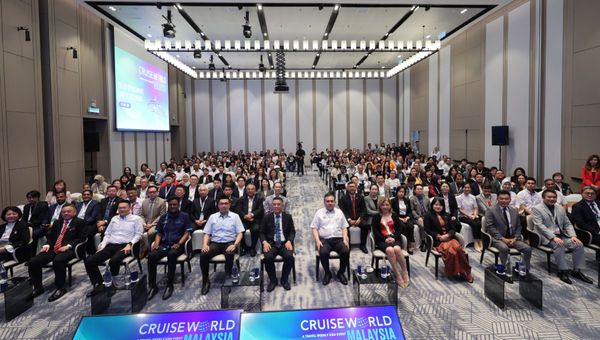
CruiseWorld Malaysia 2025 saw an overwhelming turnout, with 205 delegates filling the venue, amid Penang’s growing cruise ambitions.
The event was hosted by Penang Global Tourism, with StarDream Cruises as the gold sponsor – the only international cruise line homeporting and offering year-round sailings in Asia.
Port of possibilities
The development of Penang as a world-class cruise terminal – including the adjacent godowns and seafront – is high on the cruise agenda for Malaysia’s tourism industry, particularly as it sits at the doorstep of George Town’s UNESCO Heritage Site.
Malaysian Transport Minister Anthony Loke laid out a bold vision: for Penang to become a homeport for cruise liners and a gateway to promote Southeast Asia as a unified cruise destination.
The Swettenham Pier, owned by MMC Port Holdings, was expanded in 2021 to accommodate two cruise liners simultaneously. “I hope that in the near future, when you come back to Penang again, you will see a totally new seafront cruise terminal. Our vision is to transform it from a port of call to a home port,” Loke said.
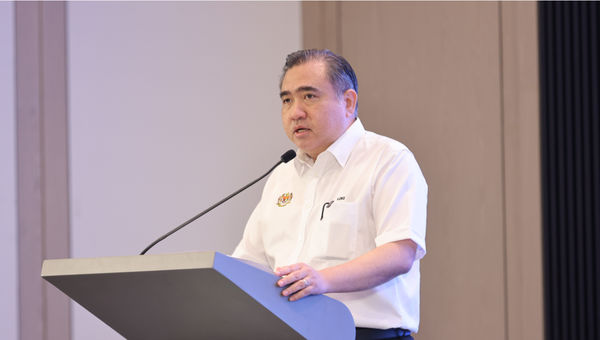
Malaysian Transport Minister Anthony Loke highlighted Penang’s cruise potential, emphasised infrastructure upgrades, and called for ASEAN collaboration to position the region as a united, world-class cruise destination.
“Penang is more than just a beautiful destination,” Loke remarked. “It is quickly becoming one of the region's most promising cruise tourism hubs. And at the very least, it will be a natural homeport for Southeast Asia.”
“This is the first cruise conference in Malaysia and a sub-sector for tourism. This industry is important as thousands of people are brought by cruise liners to Penang, Melaka, Port Klang and Langkawi,” Loke said.
On the ASEAN front, he suggested that regional port operators work together rather than compete: “We cannot look at it as a zero sum game. Yes, there are multiple destinations, but with more people coming to ASEAN, it will benefit every country.”
Cruise crowds = Jetplane loads
In Penang, Loke emphasised the need to enhance the tourist experience, noting that visitors currently only stay for 10 to 12 hours – enough time for just two or three attractions.
Major infrastructure upgrades are in motion to support cruise tourism and boost connectivity, including the expansion of Penang International Airport to handle 12 million passengers per year, a new light rail transit system linking the airport to George Town, and the Penang Hill cable car project.
“We will double the size of the current airport,” said Loke. “That is good for cruise tourism because I know that being able to be a homeport, one of the major criteria is that we must have good connectivity… It is a prerequisite condition.”
He added that cruise tourism plays a significant role in domestic tourism. “One A320 flight can only bring 180 passengers. Even an A350 can only bring 300 to 400 people. But one cruise can bring up to 4,000 to 5,000 people at any one time. That has a big impact on local tourism.”
Penang powers ahead
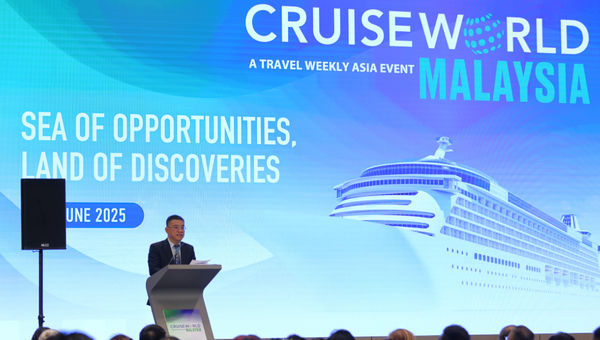
According to Wong Hon Wai, Penang State Executive Councillor for Tourism and Creative Economy, Penang’s tourism is growing with new flights, more hotels, and enhanced shore excursions and heritage sites to attract more cruise visitors.
Penang’s efforts are evidently paying off. State Executive Councillor Wong Hon Wai shared that since August 2023, 14 direct international flight routes have been established and 13 new hotels have opened.
In 2024, Penang recorded 8.2 million tourist arrivals – a 30% increase over 2019 levels.
On the cruise front, Wong said the state continues to invest in ground handling, quality excursions, and upgraded heritage attractions, including the Fort Cornwallis moat restoration project. “We want to ensure Penang offers not just a stopover, but a truly unforgettable experience,” he said.
Loke emphasised that cruise tourism is no longer an afterthought. “It is part of a bigger strategy to strengthen the country’s position as a transportation, tourism and trade hub,” he said.
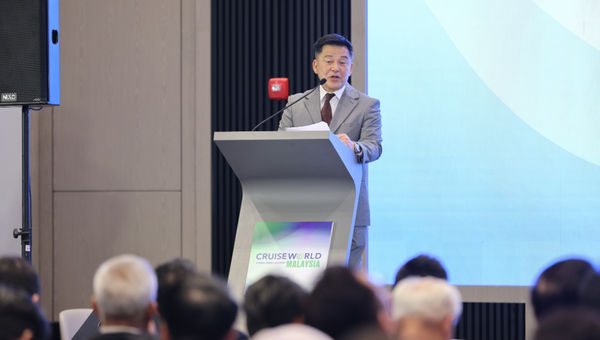
Michael Goh, president of StarDream Cruises, said Penang’s rich cuisine and experiences have made it a key part of their journey, strengthening ties after 30 years of partnership.
StarDream Cruises’ president Michael Goh echoed the sentiment, saying the company has shared a “friendship” with Penang for more than three decades, and is eager to support its growth as a cruise destination.
“Penang offers a wide cuisine and experience for our cruisers. So, this year, we will return to our roots with the launch of the StarDream Cruisers […] so from early days, Malaysia has been our key part of our journey,” he said.
Setting sail on a strong rebound
Goh noted that both the Star Voyager and Star Navigator called at Port Klang and Redang Island this year on select itineraries. He also reported a strong rebound of 70% in cruise traffic since Covid-19.
From 2022 to 2025, Malaysia recorded 1.5 million inbound passengers across 434 port calls. Port Klang led the way in volume, followed by Penang and Melaka.
Looking at operations out of Singapore that call at Malaysian ports, Goh said, “The numbers were beyond pre-Covid figures,” showing strong public appetite for cruising once more.