Cruise ships are getting bigger – and so are the ambitions shaping Asia’s cruise future.
For Gregory Tan, CEO, SATS-Creuers Cruise Services, which operates the Marina Bay Cruise Centre Singapore (MBCCS), it’s an exciting time for the industry.
Not only has the global cruise market surpassed pre-pandemic highs in passenger volumes, Asia Pacific is projected to be the fastest-growing region, with growth of 12.6% to 13.9% through 2030. Globally, the cruise ship orderbook
is also surging.
At the heart of a cruise hub
Singapore, as a major cruise homeport in Asia, welcomes around 400 ship calls annually. At the heart of this ecosystem is MBCCS, one of Asia’s busiest cruise terminals, handling more than 300 ship calls and over two million passengers annually.
Following a S$40 million (US$31 million) revamp in 2025, the 36,000 sqm terminal can now handle 11,700 passengers at once, nearly double its previous capacity.
Reconfigured passenger flows, a new check-in hall, expanded VIP lounges and upgraded facilities now allow MBCCS to berth two mega cruise ships simultaneously. It is also a homeport for Genting Dream (StarDream Cruises), Ovation of the Seas (Royal Caribbean) and Disney Adventure (Disney Cruise Line).
“For cruise tourism to succeed, no homeport can succeed alone.”– Gregory Tan, CEO, SATS-Creuers Cruise Services
Yet Tan is clear that MBCCS’ vision extends well beyond Singapore. “It is not enough to succeed alone as a homeport.
“We’ve always positioned MBCCS as a gateway to Southeast Asia. What the region needs is a ‘chain of pearls’ – a network of destinations that together are attractive for cruise passengers, allowing them to visit multiple cities in a single journey.”
A chain of pearls in the making
Compared to North America and Europe, cruising in Southeast Asia is relatively underexplored. That, Tan believes, is where the region’s biggest opportunity lies.
“Cruise lines actively seek new and exotic destinations – and Southeast Asia offers incredible diversity, from culture and gastronomy to pristine islands and lesser-known coastal towns.”
With ultra-luxury yachts also looking to Southeast Asia with interest, Tan foresees the next lap of growth for smaller, lesser-known ports in the region.
One of MBCCS’ key priorities is supporting port development across the region through strong collaboration with tourism boards and port authorities.
“A stronger regional network gives cruise lines greater confidence to deploy ships to berth in Singapore and grow Southeast Asia cruising,” he said.
In January 2026, MBCCS coorganised a familiarisation trip with the Singapore Tourism Board to East Malaysia, bringing international cruise lines to Sabah and Sarawak to assess their potential as cruise destinations and explore new itinerary opportunities linking Singapore and East Malaysia.
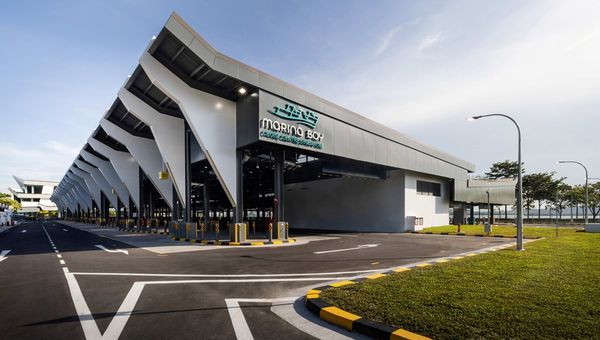
The upgrades include a new check-in area, expanded lounge facilities, larger seating zones, dual ship call capabilities, and more space for buses and ride-hailing. Photo Credit: SATS-Creuers
One region, global ambitions
Since the centre’s transformation in October 2025, MBCCS has reported improved reliability, operations and passenger satisfaction scores in areas including navigation.
In the coming months, MBCCS will roll out an enhanced Smart Terminal framework, incorporating IoT, analytics and a vehicle slot management system to improve turnaround efficiency and passenger flow – critical as ship sizes and call volumes grow.
By 2030, MBCCS will form part of the Marina South Waterfront precinct, which will include residential, lifestyle and recreational attractions.
Combined with Singapore’s cruise hub ambitions and Southeast Asia’s growth potential, Tan believes MBCCS is well positioned to support the next wave of cruising.
“We’re small, but we’re standing on the shoulders of giants,” he said.
“The work we do here is about representing Asia – and helping Southeast Asia realise its potential as a cruise region.”
This article was first published in Travel Weekly Asia’s January-March 2026 issue. Click here to read more from this issue.