What differentiates a contemporary cruise from a premium or luxury
one? Is it about ship size or the percentage of suites onboard? Is it
about the number of specialty restaurants or whether the crew remembers
that a guest is gluten-free? What about having an “aqua theatre” or
submarine onboard?
These were all questions I wrestled with as I plunged into the world
of the cruise industry last year, swimming in terms like mass market,
contemporary, premium, upper-premium, upmarket, luxury and ultra-luxury
and trying to make sense of them all.
I’ve since found that while the travel industry often uses these
words to describe cruise lines, the glossary of categories wasn’t always
this long. As cruise brands have grown and evolved, so has the list of
colourful descriptors the industry uses to label them. Lines that once
might have been easily categorised in one of three highly-defined
buckets now bleed into new categories. Along the way, some travel
advisors and cruise line executives say those words have lost their
meaning — or shouldn’t be used at all.
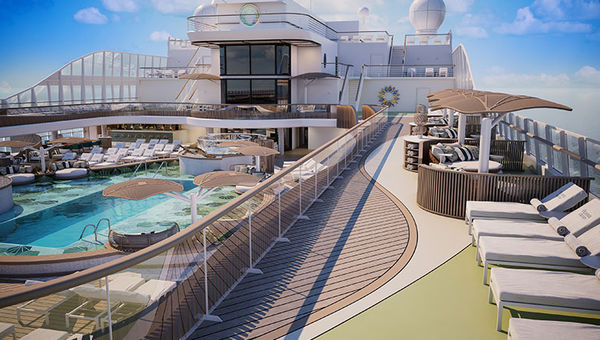
Oceania Cruises' launch in 2002 was positioned to fill the "upper-premium" gap in the cruise market. The line's newest ship, Oceania Vista, is set to debut in early 2023.
A look at naming conventions
Starting a debate about what cruise terms mean and whether they
matter is akin to throwing a T-bone steak to a pack of pit bulls, said
Mike Estill, COO of the Western Association of Travel Agencies in
Oregon. “That’s a great topic to start a brawl over if you asked it in a
bar full of cruise reps,” he said.
Historically, cruise lines were broken into three main clusters: mass
market, premium and luxury, with very different price points.
I don’t think I have ever had a client use any of the terms other than luxury, and even then, what they may think of as being luxury might, in reality, be a mass market cruise.– Henry Dennis, a Frosch leisure travel advisor based in Charlotte
Mass market cruise lines, what the industry now refers to as
contemporary, have traditionally been more family-oriented but would
also draw the spring break crowd, were very Caribbean-centric and
price-driven. Premium ships had fewer passengers, went to more places
and commanded higher rates. The small cadre of luxury lines offered even
smaller ships, white-glove service and much more inclusions at hefty
prices.
Things started changing in the early aughts. Frank Del Rio, now CEO
of Norwegian Cruise Line Holdings, co-launched Oceania Cruises in 2002,
positioning the line to fill a gap that he described as the
“upper-premium” space in the market. The product demanded a higher price
point than premium lines but not as high as luxury.
Estill called this the “catalyst that caused all of this to go from
this very well-defined, three-bucket model to what we have now, which is
just this spectrum of different colours as opposed to the defined
buckets.”
Prior to that, he said, advisors could help their clients take the
step up from contemporary to premium cruise lines, but they struggled to
shift customers from premium to luxury because there was such a huge
gap between those price points. The upper-premium space enabled agents
to take their clients from premium products like Princess Cruises and
Holland America Line and transition them to Oceania, which was followed
in that space by lines like Azamara and Viking.
Another factor in the blurring of cruise terms is yield management:
As lines look to fill their ships, they frequently adjust prices in
response to the market, which drives down close-in prices. Estill said
that that has led premium lines to drop price points to contemporary
brand levels.
“The Four Seasons can’t charge Motel 6 prices,” Estill said. “They
can do it for a week, they go for a month. But if you’re charging Motel 6
prices for long enough, you’d become Motel 6. The contemporary and
premium guys are becoming increasingly vaguer because the price points
are being mixed.”
But what has also happened is that the contemporary lines have
elevated their product far beyond what would have been considered mass
market 20 years ago. This pushed the premium lines to up their game
(such as becoming much more inclusive) and the luxury brands to follow
suit, as well.
The result is what Estill called a “rainbow” of categories.
“Those descriptors were fairly accurate 25 years ago because there
were really clear groupings and there were really clear gaps between
them,” he said. “Now, it’s become this sort of rainbow, particularly
with lines sliding between colours over the course of time. It’s really
hard to define those as much anymore.”
What cruise brands say
When executives for Norwegian Cruise Line (NCL) gathered in Venice in
February to host a tour of their first ship in the Prima class, they
were tickled. They described the 3,215-passenger Prima, which debuted in
Iceland late last month, as “heightened”, “elevated” and “upscale”. One
even described it as having a “bling-bling” feel.
Executives want to position the Norwegian Prima at the upper end of
the contemporary category, which NCL CEO Harry Sommer made explicit: “We
are definitely looking to make our ships more premium.”
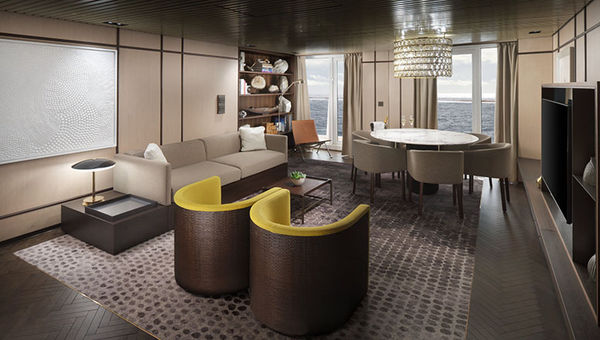
As a contemporary brand, Norwegian Cruise Line is pushing its brand to the next-highest category with luxury-like experiences such as the Haven.
Contemporary lines are often pushing their brand to the next-highest
category. For example, NCL, MSC Cruises, Royal Caribbean International
and Carnival Cruise Line have introduced luxury-like experiences on
their ships, like the Haven, MSC Yacht Club, Royal Suite Class and the
Cloud 9 Spa, respectively.
Cruise line executives are split as to whether the common industry
vernacular describing their brands is meaningful, and their opinions
sometimes depend on whether they like the category they are mostly
associated with.
“I think they matter if you understand them,” said Vicki Freed, Royal
Caribbean International senior vice president of sales, trade support
and service.
Freed doesn’t necessarily think Royal should be in the same category
as Carnival and NCL, which she described as competitors to Royal only in
that they all operate large ships.
“We actually throttle in the premium space… The reality is the product itself onboard is a premium experience,” she said.
In Lisa Lutoff-Perlo’s eyes, the labels are “antiquated”. As CEO of
Celebrity Cruises, she argues that the brand is a luxury product that
can’t seem to shake the perception that it is in the premium bucket.
“The hard thing is to try to get your brand out of these labels,” she
said. “People want to put us in premium because they say we’re too big
to be luxury. My question is, who said luxury had anything to do with
size? I believe luxury can be delivered at scale, and I believe
Celebrity delivers a lot of luxurious experiences at scale.”
Celebrity isn’t “ultra-luxury,” she said, with the “white-glove,
one-hand-behind-your-back, caviar-formal type of service with small
ships. We’re this relaxed luxury that’s beautiful, that’s luxurious,
that’s elevated. And we’re not premium, because we’re better than that.”
Azamara doesn’t fit into any of the traditional cruise categories,
said Carol Cabezas, the president of the brand. “We’ve always called
ourselves ‘upmarket.’ We don’t consider ourselves quote luxury, because
those are typically smaller ships and possibly a full-suite experience.”
For guests who may not be able to pay for a more luxurious
experience, she added, Azamara ships have the option of balcony, window
or inside cabins. “We think that we’re able to speak to a broader
audience that isn’t necessarily that luxury audience,” she said.
To Cabezas, details that customise guest experiences, like the crew
knowing how passengers like their coffee, is “probably the best kind of
luxury that you can think of.” But the fact that Azamara has smaller
ships carrying 690 passengers makes it “a more upscale experience than a
premium,” she said.
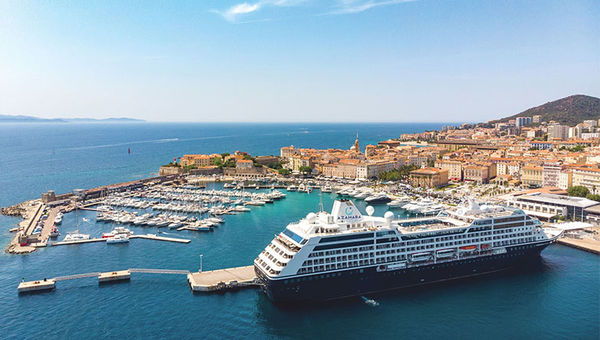
Azamara positions itself as an upmarket cruise line and its ships, often smaller size, offer the option of balcony, window or inside cabins.
Luxury has its own spectrum of cruise categories, including an
ultra-luxury space, a term often used at Seabourn. Josh Leibowitz,
president of the line, defined luxury as “nothing you would expect. In
many ways, it’s beyond expected. To me, that’s a big definition of
luxury, where we take the agenda to surprise you in ways that you never
would have expected.”
Think of the Seabourn Venture, the line’s new expedition ship, he
said: high guest-to-space ratios, cameras able to zoom in miles away to
track a polar bear on the horizon, a sauna with an ocean view, a
separate bathtub and shower in every suite.
While some brands douse their marketing with superlatives to paint
themselves as an upscale or luxury product, others eschew those words.
One is Viking. Its founder and chairman, Torstein Hagen, recalled
advice he received from his mentor, Warren Titus, founder of Royal
Viking, who is often considered the father of modern luxury cruising:
“He said, ‘Tor, don’t ever use the word “luxury.” It means so many
things to different people.’ And I agree,” Hagen said. “One has to be
careful in defining this. But I think we consider ourselves as elegant,
probably understated elegance.”
What travel advisors say
Agents largely said the categories used to describe cruises aren’t useful anymore.
“It doesn’t mean a hill of beans for my clients,” said Sabine Harris,
owner of Southern Girls Travel in Tampa, about the terms of the trade.
“I just hear this terminology from the cruise industry. … When my
clients call me, they don’t tell me they want to go on an ‘ultra-luxury’
[line].”
Instead, when Harris talks to her clients about brands, she describes
them with comparisons they can relate to: some cruise lines are like
Walmart, she’ll say, while others are like Target or Nordstrom. And
she’ll tell them, “I don’t see you at a Walmart, unless it’s a new one.”
The true value of travel consultants is understanding all the brands
and which clients belong on what product, whether it’s a ship or a
hotel, said Karyn Todd, senior vice president of sales and service for Cruise.com.
There is no cruise line that I wouldn’t recommend for somebody. It’s just a matter of getting that right mix.– Karyn Todd, senior vice president of sales and service, Cruise.com
“There is no cruise line that I wouldn’t recommend for somebody. It’s
just a matter of getting that right mix,” she said. “If you match the
right customer to the right product, you’re halfway there, and that
requires taking the time to understand what it is the customer wants
from the vacation and what they don’t want.”
Henry Dennis, a Frosch leisure travel advisor based in Charlotte,
said each line uses its own definition to describe itself, and that
confuses the client.
“Personally, I think it’s all marketing hype by the cruise lines as a
way to try to break through all the clutter and to try to ‘target’
their cruises to whatever clientele they want at that time,” he said. “I
don’t think I have ever had a client use any of the terms other than
luxury, and even then, what they may think of as being luxury might, in
reality, be a mass market cruise.”
While it’s unlikely the terms will disappear, Estill contends it’s
more useful that brands be defined by objective facts, like whether they
have inclusive fares, are family-oriented and friendly toward
multi-generational travel or are adults-only.
“I think those sorts of definitions are probably more accurate than
some sort of weird, made-up three categories of cruise lines,” he said.
“To try to continue to use them probably is doing your client a
disservice.”
Source: Travel Weekly