Travel has become the ultimate bragging right. Nearly 690 million people have crossed international borders this year – three million more than in the same period last year – despite the ongoing geopolitical tensions and instability in the Middle East.
But the way people are travelling is shifting. High-stress bucket lists and surface-level sightseeing are giving way to less frenetic itineraries rooted in community stays, deeper local immersion and destinations that sit just below the radar.
At the recent Global Tourism Economy Forum (GTEF) in Macao, industry leaders gathered to discuss where travel is heading in Asia – and how that path leads towards collaboration and community.
The rise of community-led travel and village tourism
More than 230 villages across 65 countries are now part of UN Tourism’s Best Tourism Villages initiative, and that number is climbing steadily. As travellers grow more attuned to the impact of their journeys, these rural destinations – defined by UN Tourism as low-density areas with no more than 15,000 inhabitants engaged in traditional livelihoods such as agriculture, forestry, livestock farming or fishing – are drawing interest for their blend of cultural heritage, natural scenery and genuine community immersion.
“In Malaysia, we see strong potential in nature-based tourism, community-based tourism and cultural experiences,” Chiew Choon Man, Malaysia’s deputy minister of tourism, arts and culture, said in a panel discussion at GTEF. “We believe this creates business opportunities and jobs while encouraging our visitors to appreciate our nature and our cultural heritage.”
South Korea is pursuing a similar approach through Tour Dure, a tourism project that encourages residents in rural or lesser-known regions to leverage their own resources in operating accommodation, dining establishments and tour programmes.
People now want more, not less, from their experiences. So going on one long journey to just one stop may not even satisfy as it is in the past. Why not go to a place where you can combine a few stopovers and actually make better or best use of your time or money.– Pansy Ho, GTEF founder
Homestays rewriting the accommodation playbook
Complementing community-led tourism is a shift towards accommodation that offers richer, more meaningful experiences. Homestays place travellers within the daily rhythm of a community, offering shared home-cooked meals, the chance to appreciate time-honoured customs up close and insider knowledge from resident hosts – things a traditional hotel simply cannot replicate.
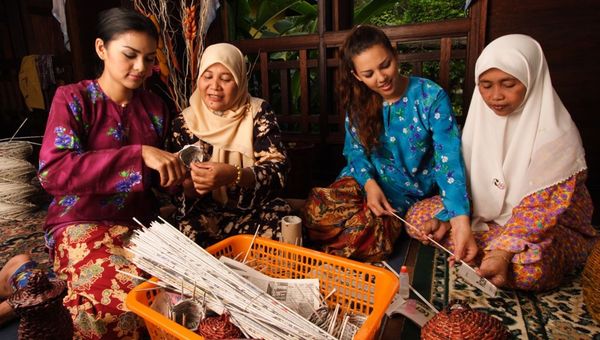
Homestays are a huge part of Malaysia’s culture and tourism initiatives. More than half a million visitors have opted to stay with local families since the initiative started in 1995.
Malaysia was among the first countries to promote an extensive homestay programme, providing guidance, training and incentives to residents willing to open their homes to visitors. As of August this year, more than half a million visitors had opted to stay with families in a kampung, or traditional village, generating around US$10 million in income for communities across the country.
More regional hubs and extended transport networks
None of this immersive authenticity matters if travellers cannot reach it. Governments are investing heavily in mobility and transport infrastructure to physically connect tourists with local communities.
China’s railway network reached 165,000 kilometres by the end of 2025 – the second-largest in the world – linking megacities to remote villages, including 19 in the UN’s Best Tourism Villages programme.
South Korea is likewise committing substantial resources to accessibility. “Visitors need to be able to travel directly to local areas without having to pass through Seoul,” said Kim Dae-hyun, the country’s vice minister of culture, sports and tourism. He revealed that South Korea has announced plans to develop five major tourism hubs around regional airports: Gimhae, Daegu, Cheongju, Muan and Yangyang.
“With this plan, our goal is to welcome more inbound tourists directly through these regional gateways, ensuring tourism profits directly support the communities being visited.”

Gimhae is among five regional airports around which South Korea plans to develop tourism hubs, helping spread visitor spending beyond Seoul.
Going on one journey with multiple stops
“People now want more, not less, from their experiences. So going on one long journey to just one stop may not even satisfy as it is in the past,” says GTEF founder Pansy Ho. “Why not go to a place where you can combine a few stopovers and actually make better or best use of your time or money.”
Dubai was among the first major proponents of the “one journey, multiple stops” concept, transforming itself from a mere transit hub on transcontinental flights into a destination worth spending a few days in before moving on.
China is adapting the same principle, inviting visitors to explore its diverse attractions, from the Great Wall in Beijing to the terracotta warriors in Xi’an to the tech-lined streets of Guangzhou, before continuing on to Hong Kong or Macao.
Travel and tourism companies with environmental accreditation
For DMCs and agents delivering experiences on the ground, adherence to standards that champion sustainability and responsible travel has shifted from bonus to baseline.
In 2018, only 19 travel and tourism companies worldwide held B Corp certification. Today, that figure sits between 400 and 500.
“This shows that the leadership community in our industry is now taking responsible and sustainable tourism very, very seriously and are willing to be held to account for that,” said Hamish Keith, CEO of destination management company EXO Travel Group, which became B Corp-certified in 2023.
“It meant that we went through a rigorous assessment to ensure that our environmental impact was assessed, that we treat our people properly, that we engage with communities responsibly and that we have a clear governance system.”