Singapore’s Changi Airport Group (CAG) has completed its first satellite gate, a standalone facility
designed to support boarding and disembarkation for flights using remote aircraft parking stands.
The airport is preparing the facility for operations, with selected flights expected to begin using it by
August 2026.
Located within the airfield, the 200sqm, air-conditioned facility is equipped with two aerobridges,
allowing passengers to board and leave aircraft under shelter in all weather conditions. Travellers
will be transported by bus between the terminal and the satellite gate before accessing the aircraft.
Around 98% of passenger flights at Changi currently use terminal contact gates with aerobridges.
The remaining flights operate from remote stands, which are used to maximise apron capacity
during busy periods.
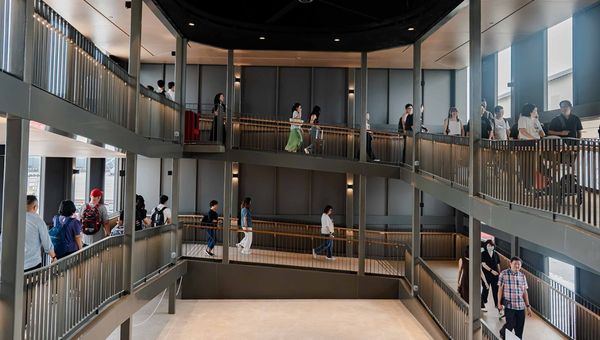
A 60m gently sloping ramp provides easier access for wheelchair users, families, seniors and travellers with luggage. Photo Credit: Changi Airport Group
The satellite gate has a gently sloping 60m ramp designed to improve accessibility for wheelchair
users, families with strollers, seniors, children and passengers travelling with wheeled cabin
baggage. The facility is also intended to provide a more sheltered working environment for airport
staff involved in remote flight operations.
Powered entirely by rooftop solar panels and an off-grid battery system, the satellite gate is
designed as a zero-energy facility. It also incorporates smart building technology, including
automated air-conditioning based on flight schedules and wireless fault reporting for maintenance
teams.
Since May 2026, more than 500 airport staff have taken part in training and operational trials.
"Every element of the satellite gate has been designed with passenger experience, universal
accessibility, staff-friendliness and operational practicality in mind,” says Koh Ming Sue, executive
vice president, engineering & development, CAG.
CAG said the operational trials will help assess plans for additional satellite gates, alongside factors
such as traffic demand and operational requirements.