As cruise ships become larger and more sophisticated, cruise ports are evolving to meet the increasing demands of both passengers and the vessels themselves.
From enhanced infrastructure to smoother operations, ports are recognising the need for transformation to keep up with the rapid growth of the cruise industry. This topic was at the forefront of the discussions during the Port Leaders Panel Discussion held on 9 October 2024, at CruiseWorld Asia, hosted at the Pan Pacific Singapore.
Handling larger ships and faster passenger flow
As cruise ships continue to grow in size, with some vessels carrying upwards of 4,000 passengers, ports are under pressure to manage a seamless flow of disembarkation and embarkation.
Gregory Tan, COO of SATS-Creuers Cruise Services, highlighted the speed at which passengers now move through immigration, explaining that the luggage from these massive ships is typically offloaded and ready within 30 to 40 minutes of arrival.
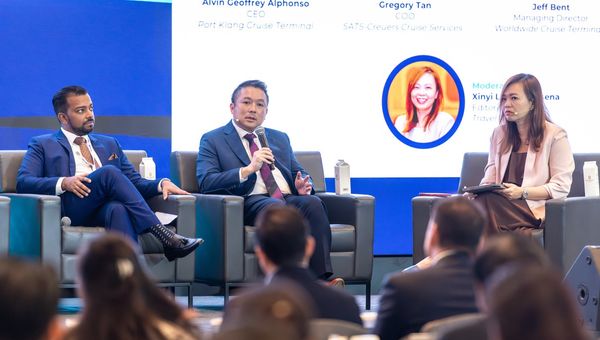
"Efficiency is key; our goal is to ensure a seamless experience for passengers, from disembarkation to transportation, enhancing their overall cruising journey,” said Gregory Tan, COO of SATS-Creuers Cruise Services.
However, Tan acknowledged that ground transportation remains a challenge, particularly with the rise of ride-hailing apps like Grab in Singapore. He noted that this has caused congestion, as passengers often outnumber available cars.
In response, Tan shared that the Marina Bay Cruise Centre Singapore (MBCCS) had expanded its passenger pick-up zones from five to 18 lots, significantly alleviating congestion. "The traffic congestion and the frustrations and the safety concerns have been put to rest," he said.
Overcoming operational constraints
Jeff Bent, managing director of Worldwide Cruise Terminals in Hong Kong, echoed similar concerns, noting that each terminal has its own unique set of constraints. For Hong Kong, the bottleneck often lies in ground transportation.

"Ground transportation is a crucial aspect of the cruise experience, and improving accessibility will enhance the overall journey for passengers arriving at our terminals,” said Jeff Bent, managing director, Worldwide Cruise Terminals.
However, he shared that the introduction of a direct bus service to the high-speed rail station has improved accessibility for passengers. Bent also highlighted the convenience of the city's buses now accepting various forms of payment, from bank cards to QR codes.
"The pre and post opportunities are fantastic, especially for long-haul source markets coming in on fly-cruise packages," Bent explained, referring to the increasing number of locals and international tourists utilising the high-speed rail for land-based vacations before or after their cruise.
Malaysia’s growing middle-class cruise market
Turning to Malaysia, Alvin Geoffrey Alphonso, CEO of Port Klang Cruise Terminal, shared that 2023 was a record year for the country, with nearly 200 cruise vessels and approximately 650,000 passengers passing through Port Klang.
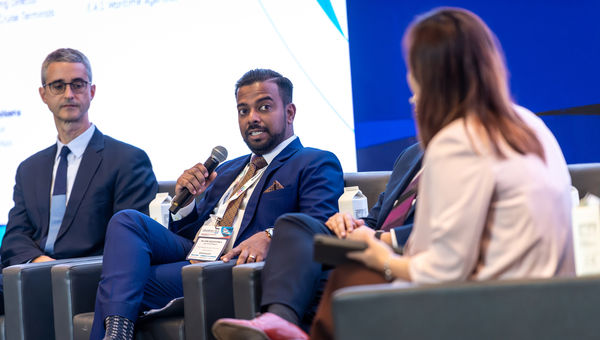
"With the rise of middle-income earners in Malaysia, we're witnessing increased demand for cruising, making it essential to enhance our ports and excursions,” said Alvin Geoffrey Alphonso, CEO, Port Klang Cruise Terminal.
Much of this growth has been driven by the rising middle-class population in Malaysia, who are increasingly attracted to cruising. Alphonso mentioned a recent partnership with Costa Cruises, where 95% of passengers were middle-income Malaysians, highlighting the growing local demand for cruise holidays.
Alphonso also shared plans for Port Klang’s infrastructure upgrade, which includes extending the pier to 1 kilometre and redesigning the terminal building to handle up to 8,000 passengers simultaneously by 2026. "We will also be implementing autogates to further streamline passenger processing," he added.
Thailand’s push for port development
Wattana Choksuvanich, managing director of E.A.S. Maritime Agencies in Thailand, discussed the country’s cruise port development plans. While Thailand has long been a part of Southeast Asia's cruise itinerary.
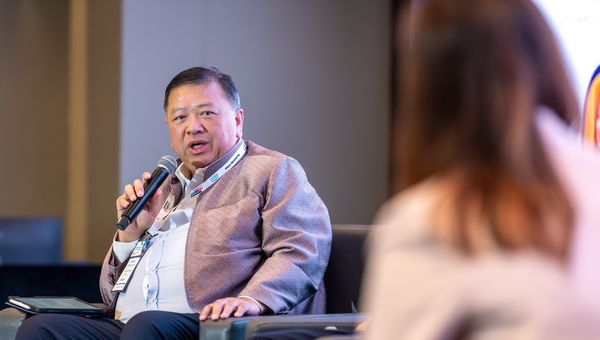
"With the rise of middle-income earners in Malaysia, we're witnessing increased demand for cruising, making it essential to enhance our ports and excursions,” said Wattana Choksuvanich, managing director, E.A.S. Maritime Agencies
Choksuvanich noted that there is now a push to increase competitiveness by improving port infrastructure and connectivity, particularly in the Gulf of Thailand. He cited Songkhla as a potential new port of call, which could help diversify cruise itineraries in the region.
"We're looking at building a small landing pier in Songkhla by 2026, which could accommodate cruise ships and provide access to rich historical and eco-tourism experiences," Choksuvanich explained. He also mentioned ongoing studies into developing new ports in Pattaya and Phuket to serve as home ports, further enhancing Thailand's position in the regional cruise market.
Sustainability and shore power
The conversation around port development wouldn't be complete without addressing sustainability. Tan from SATS-Creuers acknowledged that while Europe and North America have mandated shore power for cruise ships to reduce emissions while docked, Southeast Asia has yet to fully embrace this trend.
"This is something we will really be looking at in the years to come, as cruise ships are already being built with various forms of shore power electrification," Tan noted. Shore power allows ships to switch off their engines while in port, significantly reducing air pollution.
Visa relaxations and LNG bunkering
Bent also discussed the recent relaxation of visa requirements in Southeast Asia, with Thailand, Malaysia, and Singapore all granting visa-free access to Chinese nationals. This, he said, presents an excellent opportunity for open-jaw sailings, which could bring more Chinese tourists to the region.
Bent further shared that Hong Kong would soon be able to offer LNG (liquefied natural gas) bunkering for cruise ships, following in Singapore’s footsteps. "This will enable us to collectively get the latest and greatest ships that will command the highest yields," Bent concluded.