Malaysia is well positioned to capture the next wave of cruise growth in Asia, with industry leaders saying the country has the connectivity, infrastructure and tourism appeal to become one of Asia's leading cruise hubs if regional cooperation and seamless travel experiences continue to improve.
This was a key theme at CruiseWorld Malaysia 2026, held in Kuala Lumpur on 15 July, where delegates agreed that the industry's next phase of growth will depend not only on adding ships and expanding port capacity, but also on creating smoother, more integrated journeys for travellers.
Themed "Navigating the Next Wave", the event was organised by Travel Weekly Asia and supported by StarDream Cruises, Penang Global Tourism and Marina Bay Cruise Centre Singapore.
Malaysia rising as a cruise destination
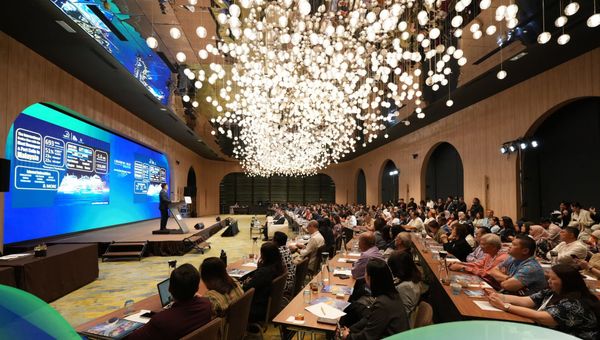
StarDream Cruises' Michael Goh addressing the audience during his opening presentation.
Speaking at the conference, StarDream Cruises president Michael Goh said Malaysia is well placed to benefit from the industry's expansion because of its strategic location, strong air connectivity, quality port infrastructure and diverse tourism offerings.
He said Malaysia has remained Southeast Asia's second-largest cruise source market since 2016 and continues to play an increasingly important role as both a cruise destination and homeport.
Since resuming post-pandemic operations in 2022, StarDream Cruises has made close to 700 port calls across Malaysia, with more than half at Port Klang. Penang and Melaka have also served as important ports of calls and destinations, while the cruise operator has expanded operations to Port Dickson, Langkawi, Pangkor, Redang and Tioman.
The company is also exploring cruise development opportunities in Sarawak to strengthen connectivity between East and West Malaysia.
According to Goh, StarDream Cruises has brought more than 1.6 million inbound cruise visitors to Malaysia since 2022, supporting tourism recovery and contributing to Visit Malaysia 2026. Beyond direct visitor spending, he said cruise tourism benefits local businesses, creates jobs and encourages repeat visits, with many passengers returning later for longer land-based holidays.
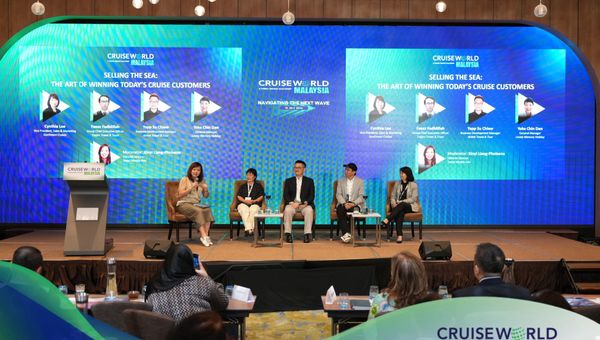
Panel discussions at CruiseWorld Malaysia 2026 examined how travel agents could better inform and inspire clients to set sail.
Malaysia’s Tourism, Arts and Culture Minister Tiong King Sing said cruise tourism supports a wide range of industries, including transport providers, restaurants, retailers, tour operators, local artisans and small and medium enterprises.
He said Malaysia aims to build a stronger cruise economy that delivers greater value across the tourism ecosystem. With international cruise ports already operating in Port Klang, Penang, Langkawi and Kota Kinabalu, alongside efforts to strengthen connectivity through destinations such as Kuala Terengganu and Sarawak, Malaysia is positioning itself for a larger role in ASEAN's expanding cruise network.
“As of June this year, Malaysia has recorded 106 international cruise port calls, at the moment, Penang continues to lead as one of the region's busiest cruise gateways,” he noted.
While Malaysia's prospects remain strong, speakers said broader regional cooperation would be essential if ASEAN is to realise its full cruise potential.
Growing Southeast Asia’s cruise port network
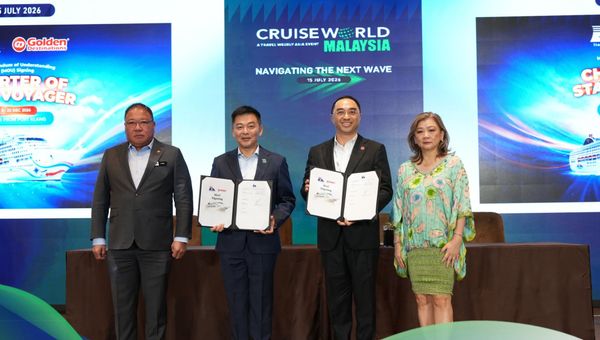
The MOU signing ceremony between StarDream Cruises and Golden Destinations Group Berhad took place at CruiseWorld Malaysia 2026 with Tourism, Arts and Culture Minister Tiong King Sing and Northstar Travel Group's Irene Chua as witnesses.
Mita Lim, managing director of Golden Destinations Group Berhad, said Southeast Asia possesses advantages few regions can match, including year-round cruising conditions, diverse seas and a wide variety of destinations.
Having visited major cruise homeports in the US, Caribbean, Mediterranean, Hong Kong, Shanghai and Australia, Lim said Southeast Asia's biggest challenge is not attracting visitors but developing the region in a more coordinated way.
He called for stronger cooperation among ASEAN governments and greater investment in cruise infrastructure, saying the region could emulate the success of the Mediterranean and Caribbean if countries worked together to strengthen connectivity.
Lim also expressed hope that the ASEAN Secretariat would play a more active role in advancing regional cruise development, allowing more international visitors to begin cruises not only from Singapore but also from Kuala Lumpur and other ASEAN cities.
During the event, Golden Destinations signed a memorandum of understanding with StarDream Cruises to operate charter cruises from Port Klang to Phuket and Krabi on Star Voyager in December.
Experiences are key
Gregory Tan, CEO of SATS-Creuers Cruise Services, the operator of the Marina Bay Cruise Centre Singapore (MBCCS), said consumers now compare cruises with resorts, theme parks and all-inclusive holidays instead of only other cruise products.
While destinations may initially attract attention, he said travellers increasingly book when they can clearly imagine a convenient and enjoyable experience from the moment they begin planning until they return home.
This has prompted cruise operators and terminals to focus on every stage of the customer journey, including booking, embarkation and post-cruise travel.
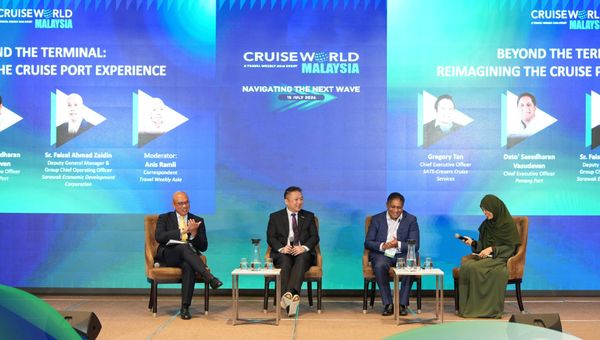
Sarawak Economic Development Corporation's Sr. Faisal Ahmad Zaidin, Penang Port's Dato' Sasedharan Vasudevan and SATS-Creuers Cruise Services' Gregory Tan saw the importance of connected cruise ports to drive Southeast Asia's cruise tourism forward.
At MBCCS, improvements have included expanded ground transport facilities, additional coach bays, greater ride-hailing capacity, early baggage drop-off services and a dedicated second check-in hall to improve passenger flow during busy periods.
The terminal has also introduced a Cruise-Fly service that allows passengers to check in luggage for same-day flights before spending more time exploring Singapore after disembarking.
Tan said travel agents must also adapt by selling experiences rather than simply destinations, tailoring cruise holidays to different travellers and building long-term customer relationships.
Echoing the conference theme, Irene Chua, Vice President and Group Publisher of Northstar Travel Group, said the industry's "next wave" will be shaped by multiple forces, including larger ships, new destinations, artificial intelligence and changing traveller expectations.
Rather than any single trend, she said future success will depend on how effectively the industry adapts to these changes while delivering seamless travel experiences.
For Malaysia, that combination of expanding infrastructure, growing industry investment and closer regional collaboration presents an opportunity to strengthen its position as one of ASEAN's leading cruise gateways while capturing a larger share of the sector's future growth.